Il nostro olio d'oliva Luparello

Case Luparello · L’olio della nostra tenuta

L’essenza della nostra terra, in ogni goccia.

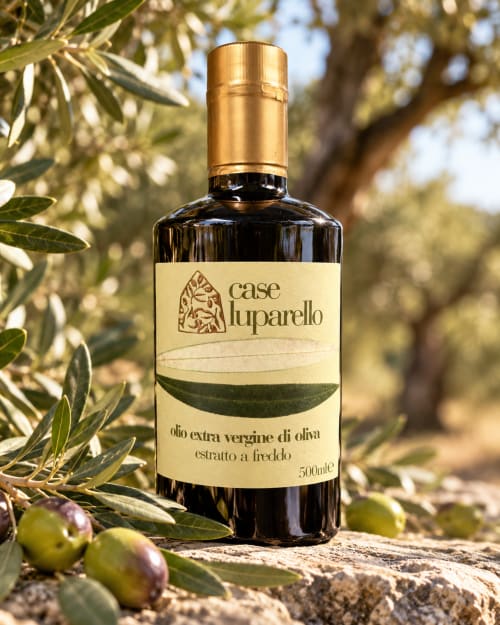
Tra gli ulivi della Sicilia sud-orientale nasce il nostro olio extravergine di oliva: un incontro fra paesaggio, lavoro agricolo e il piacere delle cose fatte con cura.

Un olio che non ci limitiamo a raccontare attraverso il gusto: ne facciamo verificare anche la qualità attraverso analisi chimiche e valutazioni sensoriali professionali.


La nostra tenuta

Un uliveto, una storia di famiglia

Prima ancora degli appartamenti, c'erano gli ulivi. Da circa quarant'anni, oltre mille alberi caratterizzano la nostra campagna nella Sicilia sud-orientale, nei pressi di Marzamemi. Sono parte della storia di Case Luparello e del paesaggio che accoglie chi sceglie di soggiornare qui.

Tra queste chiome argentate abbiamo realizzato quattro abitazioni indipendenti e una splendida piscina a sfioro. Un luogo in cui l'ospitalità e la tradizione agricola convivono naturalmente.

Oltre 1.000ulivi nella tenuta
Circa 40 annidi storia dell'uliveto
4 appartamentiispirati al mondo delle olive

Dalla campagna alla tavola

La qualità comincia molto prima dell’assaggio

Ogni extravergine porta con sé le caratteristiche delle olive e delle scelte compiute nella coltivazione, nella raccolta, nell’estrazione e nella conservazione. Il nostro impegno è rispettare questa materia prima e lasciare che sia il risultato a parlare.

01 · Le olive

Il legame con la terra

La qualità del frutto, il momento della raccolta e la cura nella gestione dell'uliveto contribuiscono al risultato finale.

02 · La lavorazione

Estrazione a freddo

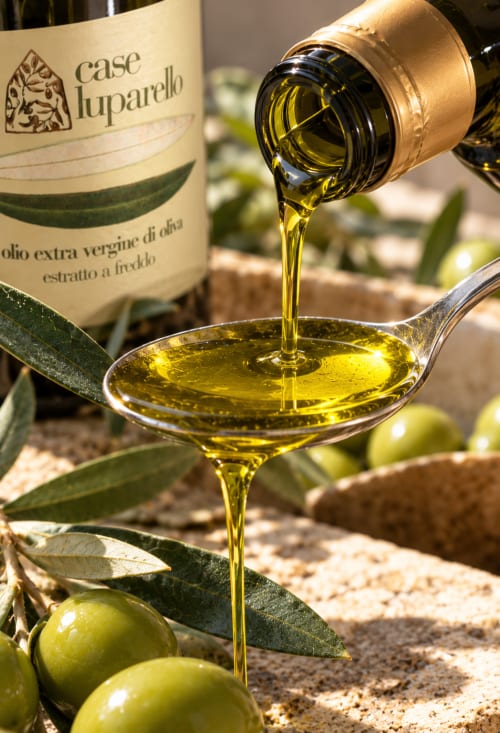
Il nostro olio è ottenuto mediante procedimenti meccanici e lavorazione a freddo, senza l'impiego di solventi.

03 · Il gusto

Un piacere da scoprire

Fruttato, amaro e piccante sono sensazioni da riconoscere con attenzione: raccontano il profilo sensoriale di un olio.

Panel test · Raccolto 2026

Un fruttato verde che trova il suo equilibrio

Che cosa distingue un olio di carattere? Il fruttato esprime la componente aromatica dell’oliva; amaro e piccante sono attributi positivi, non difetti. Il loro equilibrio contribuisce a rendere riconoscibile il profilo dell’extravergine.

Il 7 ottobre 2026, un campione del nostro olio del lotto 1 del 09/2026 è stato esaminato dal panel professionale A.M.E.D.O.O. di Bari. La valutazione descrive un fruttato verde medio, con amaro e piccante di intensità media, in un insieme equilibrato.

Fruttato verde4,5
Amaro3,1
Piccante3,6

Mediane del panel test A.M.E.D.O.O., certificato n. 1698 del 07/10/2026. Mediana dei difetti: 0,0. I risultati si riferiscono esclusivamente al campione esaminato.

Qualità documentata · Analisi 2026

Oltre il gusto, ci sono i dati.

Un buon extravergine deve saper emozionare al palato, ma la qualità si valuta anche in laboratorio. Per questo abbiamo sottoposto il campione del lotto 1 del 09/2026 ad analisi chimiche e a una valutazione organolettica professionale. I risultati documentano la sua conformità alla categoria olio extra vergine di oliva.

298Biofenoli totaliespressi come tirosolo · mg/kg
0,26%Acidità liberaespressa come acido oleico
7,2Numero di perossidimeq O₂/kg di olio

Polifenoli: che cosa sono e perché interessano la ricerca

I polifenoli sono composti naturalmente presenti nelle olive e, in quantità variabile, nell’olio che se ne ricava. Fra questi si trovano sostanze della famiglia dei composti fenolici, studiate in ambito alimentare per la loro attività antiossidante e per il rapporto con i processi di ossidazione. Il loro contenuto dipende da numerosi fattori, fra cui cultivar, maturazione delle olive, lavorazione e conservazione.

Per capire questo interesse basta pensare allo stress ossidativo: in biologia descrive uno squilibrio fra processi ossidativi e sistemi di difesa dell’organismo, ed è studiato anche in relazione ai lipidi. I composti fenolici dell’olivo sono oggetto di ricerca in questo ambito. La loro presenza rende l’extravergine interessante dal punto di vista della composizione e della nutrizione, ma non basta da sola per attribuire a un determinato olio un effetto specifico sulla salute. Per questo preferiamo mostrare i risultati delle analisi e distinguere con precisione i diversi parametri misurati.

Perché amaro e piccante sono segnali da conoscere

Nel linguaggio dell’assaggio, amaro e piccante vengono talvolta scambiati per difetti. In realtà sono attributi positivi del profilo sensoriale dell’olio vergine. Alcuni composti fenolici possono contribuire a queste sensazioni, insieme agli altri elementi della sua composizione. Un equilibrio gradevole fra fruttato, amaro e piccante è parte della sua identità, non una misura automatica dei benefici per la salute.

Approfondisci i risultati delle analisi

Dati riferiti al campione del lotto 1 del 09/2026, analizzato da Chemiservice (rapporto di prova n. 2628584 del 12/10/2026).

Biofenoli totali (come tirosolo)298 ± 83 mg/kg
Composti fenolici totali (metodo 2)312 mg/kg
Composti considerati ai fini del claim UE3,4 mg ogni 20 g di olio
Acidità libera0,26 ± 0,03%
Numero di perossidi7,2 ± 1,2 meq O₂/kg
Mediana dei difetti (panel test)0,0

Come leggere correttamente i dati: 298 mg/kg e 312 mg/kg sono risultati ottenuti con determinazioni differenti e non sono intercambiabili con il parametro previsto per l’indicazione salutistica europea sui polifenoli. Per quest’ultima, il laboratorio ha quantificato 3,4 mg/20 g dei composti pertinenti; la soglia prevista dal Regolamento (UE) n. 432/2012 è 5 mg/20 g. Di conseguenza, non attribuiamo a questo olio la specifica indicazione salutistica autorizzata dalla normativa. Alcune determinazioni riportate nel rapporto non rientrano nell’accreditamento ACCREDIA; si rimanda al rapporto integrale per i dettagli.

Fonte delle misurazioni: Chemiservice, rapporto n. 2628584 (12/10/2026); A.M.E.D.O.O., panel test n. 1698 (07/10/2026). I risultati non vanno estesi automaticamente a lotti differenti.

Sapori siciliani

In cucina, la semplicità fa la differenza

L'olio extravergine è uno dei gesti quotidiani della cucina mediterranea. A volte bastano pochi ingredienti per apprezzarne le sfumature: un pane casereccio, le verdure di stagione, una ricetta tramandata in famiglia.

Pane e bruschette

Per assaporare l'olio a crudo e riconoscerne i profumi.

Ortaggi e verdure

Melanzane, zucchine e verdure grigliate sono un abbinamento naturale.

Legumi e pesce

Un filo a crudo completa zuppe, minestre e piatti mediterranei.

Un'esperienza da vivere

Degustazione dell'olio a Case Luparello

Durante la visita alla tenuta, potrai conoscere più da vicino il mondo dell'olio extravergine e imparare a distinguere fruttato, amaro e piccante. Un'esperienza per chi ama scoprire la Sicilia anche attraverso i suoi sapori.

Degustazione su prenotazione, secondo disponibilità. 25 € a persona.


Ospitalità tra gli ulivi

Quattro appartamenti, una sola origine

Biancolilla, Moresca, Carolea e Coratina: anche i nomi delle nostre case parlano di olive. Li abbiamo scelti per mantenere vivo il legame fra la tenuta agricola e la nostra idea di ospitalità.

Qui una passeggiata tra gli alberi, un pomeriggio nella piscina a sfioro e un assaggio del nostro olio diventano momenti diversi dello stesso soggiorno.


Informazioni utili

Domande frequenti

Posso acquistare il vostro olio extravergine?

Sì, contattaci per conoscere i formati attualmente disponibili, i prezzi e le modalità di acquisto.

Che cosa significa estrazione a freddo?

Indica una modalità di lavorazione dell'olio mediante procedimenti meccanici, nel rispetto delle condizioni di temperatura previste per poter utilizzare questa dicitura.

Come posso prenotare una degustazione?

Inviaci una richiesta tramite la pagina Contatti per concordare disponibilità e organizzazione.

Come si conserva correttamente l'olio extravergine?

È preferibile tenere la confezione ben chiusa, in un luogo fresco e al riparo da luce diretta, calore e contatto prolungato con l'ossigeno.

Che cosa sono i polifenoli dell’olio extravergine?

Sono composti fenolici naturalmente presenti nell’olio, studiati anche per le loro proprietà antiossidanti. Il contenuto varia secondo olive, stagione, lavorazione e conservazione. La presenza di polifenoli non autorizza, di per sé, specifiche promesse di benefici per la salute.

Il vostro olio è stato analizzato?

Sì. Per il campione del lotto 1 del 09/2026 disponiamo del rapporto di prova Chemiservice n. 2628584, datato 12 ottobre 2026, e del panel test A.M.E.D.O.O. n. 1698 del 7 ottobre 2026. I documenti possono essere richiesti per approfondimento.

Se un extravergine pizzica in gola significa che è acido?

No. Il piccante è una sensazione sensoriale positiva, mentre l’acidità libera è un parametro chimico misurato in laboratorio e non coincide con la percezione del sapore acido.

Il nostro olio, a casa tua

Scegli il formato, conserva il carattere.

Un assaggio della nostra Sicilia da condividere, regalare o tenere ogni giorno in cucina. Per informazioni su disponibilità e acquisto diretto, puoi contattarci.

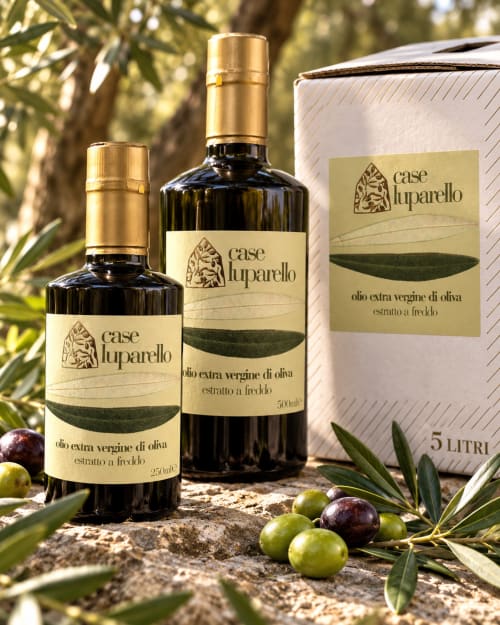
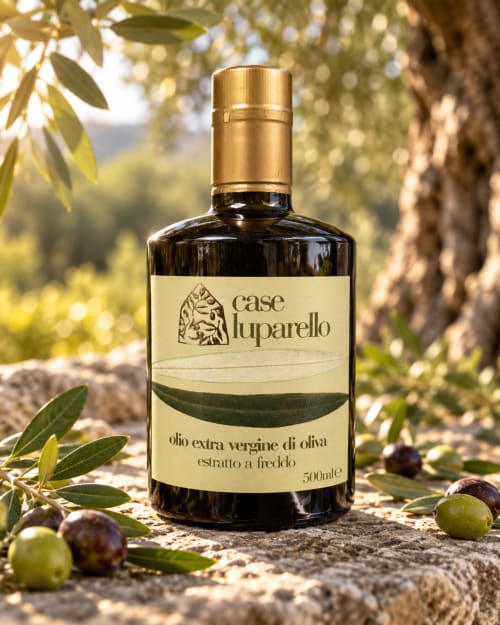
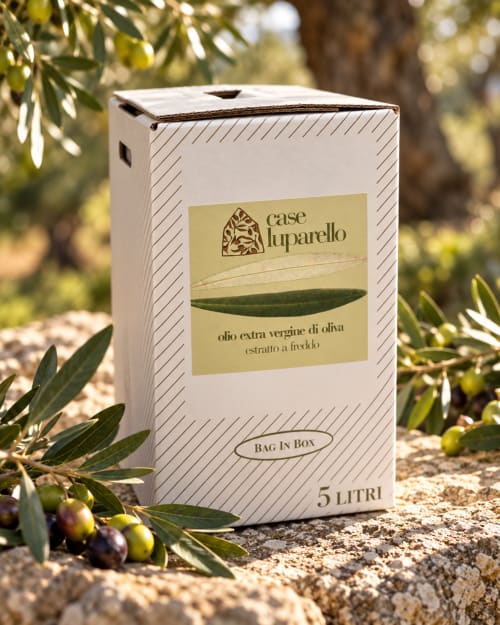
Tre formati, lo stesso olio di Case Luparello.

Scopri qui sotto le confezioni disponibili: bottiglia da 250 ml, bottiglia da 500 ml e bag in box da 5 litri. Scegli la soluzione più adatta a te.
Case Luparello · Olive oil from our estate

The essence of our land, in every drop.

Among the olive trees of south-eastern Sicily, our extra virgin olive oil brings together a distinctive landscape, agricultural tradition and the pleasure of carefully made food.

Rather than relying on flavour alone, we also have our oil’s quality assessed through laboratory analyses and professional sensory evaluation.


Our estate

An olive grove, a family story

Before the apartments, there were olive trees. For around forty years, over a thousand trees have shaped our countryside in southeast Sicily, near Marzamemi. They are part of the history of Case Luparello and the landscape that welcomes everyone who stays here.

Among these silvery canopies, we have created four independent homes and a beautiful infinity pool. A place where hospitality and farming tradition live naturally side by side.

Over 1,000olive trees on the estate
Around 40 yearsof olive grove history
4 apartmentsinspired by olive varieties

From the grove to your table

Quality begins long before the first taste

Every extra virgin olive oil reflects its olives and the decisions made during cultivation, harvesting, extraction and storage. We aim to respect this raw material and let the result speak for itself.

01 · The olives

Our connection to the land

The quality of the fruit, the timing of the harvest and care for the olive grove all contribute to the final result.

02 · Processing

Cold extraction

Our oil is obtained through mechanical processes and cold extraction, without the use of solvents.

03 · Taste

A pleasure to discover

Fruitiness, bitterness and pungency are sensations to recognise with care: together, they tell the story of an oil’s sensory profile.

Sensory panel · 2026 harvest

Green fruitiness, beautifully balanced

What gives olive oil its character? Fruitiness expresses the aromas of the olives, while bitterness and pungency are positive sensory attributes, not flaws. Their balance helps define the oil’s personality.

On 7 October 2026, a sample from our batch 1 of 09/2026 was examined by the professional A.M.E.D.O.O. tasting panel in Bari. Its assessment described medium green fruitiness, with medium bitterness and pungency, in a balanced sensory profile.

Green fruitiness4,5
Bitterness3,1
Pungency3,6

Panel medians: A.M.E.D.O.O. certificate no. 1698, dated 7 October 2026. Median of defects: 0.0. Results apply solely to the tested sample.

Documented quality · 2026 analyses

Beyond flavour, there are facts.

An exceptional extra virgin olive oil should delight the palate, but quality is also assessed in the laboratory. We therefore submitted a sample from batch 1 of 09/2026 for chemical analyses and a professional sensory evaluation. The findings confirm that the tested sample meets the requirements for the extra virgin olive oil category.

298Total biophenolsexpressed as tyrosol · mg/kg
0,26%Free acidityexpressed as oleic acid
7,2Peroxide valuemeq O₂/kg of oil

Polyphenols: what they are and why scientists study them

Polyphenols are compounds naturally found in olives and, in varying amounts, in the oil extracted from them. These include phenolic compounds investigated in food science for their antioxidant activity and their relationship with oxidation processes. Their concentration depends on the olive varieties, ripeness, processing and storage, among other factors.

This scientific interest is connected with oxidative stress, a term describing an imbalance between oxidative processes and the body’s protective systems; researchers also investigate its relationship with lipids. Olive phenolic compounds are studied in this context. However, their presence alone is not enough to attribute a specific health effect to an individual oil. We therefore prefer to present the actual analytical findings, with a clear distinction between the different measurements.

Why bitterness and pungency matter

Bitterness and the peppery sensation of olive oil are sometimes mistaken for faults. In fact, they are positive sensory attributes of virgin olive oil. Certain phenolic compounds may contribute to these sensations, alongside other components. A pleasing balance of fruitiness, bitterness and pungency helps define the oil, but does not automatically indicate a particular health benefit.

Explore our laboratory results

Figures relate to a sample from batch 1 of 09/2026, tested by Chemiservice (test report no. 2628584, 12 October 2026).

Total biophenols (as tyrosol)298 ± 83 mg/kg
Total phenolic compounds (method 2)312 mg/kg
Compounds relevant to the EU health claim3.4 mg per 20 g of oil
Free acidity0.26 ± 0.03%
Peroxide value7.2 ± 1.2 meq O₂/kg
Median of defects (sensory panel)0.0

Understanding these figures: the 298 mg/kg and 312 mg/kg results come from different analytical determinations and must not be equated with the parameter used for the EU polyphenol health claim. For the latter, the laboratory measured 3.4 mg/20 g of the relevant compounds; Regulation (EU) No 432/2012 requires at least 5 mg/20 g. We therefore make no corresponding authorised health claim for this oil. Some tests listed in the report fall outside the laboratory’s ACCREDIA accreditation; consult the full report for details.

Analytical sources: Chemiservice report no. 2628584 (12 October 2026); A.M.E.D.O.O. sensory panel no. 1698 (7 October 2026). Results must not be assumed to apply to other batches.

Sicilian flavours

In the kitchen, simplicity makes the difference

Extra virgin olive oil is an everyday part of Mediterranean cooking. Sometimes just a few ingredients are enough to appreciate its nuances: rustic bread, seasonal vegetables or a recipe handed down through the family.

Bread and bruschetta

To taste the oil uncooked and discover its aromas.

Seasonal vegetables

Aubergines, courgettes and grilled vegetables make a natural pairing.

Pulses and fish

A drizzle before serving adds the finishing touch to soups and Mediterranean dishes.

An experience to enjoy

Olive oil tasting at Case Luparello

During your visit to the estate, discover the world of extra virgin olive oil and learn to distinguish fruitiness, bitterness and pungency. An experience for anyone who loves discovering Sicily through its flavours.

Tastings by prior arrangement, subject to availability. €25 per person.


Hospitality among the olive trees

Four apartments, one shared origin

Biancolilla, Moresca, Carolea and Coratina: even the names of our homes tell a story about olives. We chose them to keep the connection between our farming estate and our approach to hospitality alive.

Here, a walk among the trees, an afternoon in the infinity pool and a taste of our olive oil become different moments of the same stay.


Useful information

Frequently asked questions

Can I buy your extra virgin olive oil?

Yes. Contact us to find out about the formats currently available, prices and how to purchase.

What does cold extraction mean?

It describes oil processing through mechanical methods under the temperature conditions required to use this term.

How can I arrange a tasting?

Send us an enquiry through the Contact page to arrange availability and details.

How should extra virgin olive oil be stored?

Keep the container tightly closed in a cool place, away from direct light, heat and prolonged exposure to oxygen.

What are the polyphenols in extra virgin olive oil?

They are naturally occurring phenolic compounds studied, among other things, for their antioxidant properties. Levels vary with the olives, harvest, processing and storage. Their presence alone does not substantiate specific health-benefit claims.

Has your olive oil been laboratory tested?

Yes. For the sample from batch 1 of 09/2026, we have Chemiservice test report no. 2628584 (12 October 2026) and A.M.E.D.O.O. sensory-panel certificate no. 1698 (7 October 2026). You may request these documents for further information.

Does a peppery sensation mean that an olive oil is acidic?

No. Pungency is a positive sensory attribute, whereas free acidity is a chemical parameter measured in a laboratory. It is not the same as a sour taste.

Our olive oil, at your table

Choose the format. Keep the character.

A taste of our Sicily to share, give as a gift or enjoy in everyday cooking. Contact us for availability and direct purchases.

Three formats. The same Case Luparello olive oil.

Explore the options below: 250 ml bottle, 500 ml bottle and 5-litre bag-in-box. Choose the format that suits you best.

Case Luparello · Olivenöl von unserem Landgut

Die Essenz unserer Heimat – in jedem Tropfen.

Zwischen den Olivenbäumen im Südosten Siziliens entsteht unser natives Olivenöl extra – geprägt von der Landschaft, der landwirtschaftlichen Tradition und unserer Freude an sorgfältig hergestellten Lebensmitteln.

Seine Qualität beschreiben wir nicht nur anhand des Geschmacks: Wir lassen sie auch durch Laboranalysen und eine professionelle sensorische Prüfung untersuchen.


Unser Anwesen

Ein Olivenhain, eine Familiengeschichte

Vor den Ferienwohnungen waren die Olivenbäume da. Seit rund vierzig Jahren prägen über tausend Bäume unsere Landschaft im Südosten Siziliens, nahe Marzamemi. Sie gehören zur Geschichte von Case Luparello und zu der Landschaft, die alle unsere Gäste empfängt.

Zwischen diesen silbrig schimmernden Baumkronen haben wir vier unabhängige Ferienwohnungen und einen wunderschönen Infinity-Pool geschaffen. Ein Ort, an dem Gastfreundschaft und landwirtschaftliche Tradition ganz selbstverständlich zusammengehören.

Über 1.000Olivenbäume auf dem Anwesen
Rund 40 JahreGeschichte des Olivenhains
4 Ferienwohnungeninspiriert von Olivensorten

Vom Olivenhain auf den Tisch

Qualität beginnt lange vor dem ersten Probieren

Jedes native Olivenöl extra spiegelt die Oliven und die Entscheidungen bei Anbau, Ernte, Gewinnung und Lagerung wider. Wir möchten diesen wertvollen Rohstoff respektieren und das Ergebnis für sich sprechen lassen.

01 · Die Oliven

Unsere Verbundenheit mit dem Land

Die Qualität der Früchte, der Erntezeitpunkt und die Pflege des Olivenhains tragen gemeinsam zum Ergebnis bei.

02 · Die Verarbeitung

Kaltextraktion

Unser Öl wird durch mechanische Verfahren und Kaltextraktion ohne den Einsatz von Lösungsmitteln gewonnen.

03 · Der Geschmack

Ein Genuss zum Entdecken

Fruchtigkeit, Bitterkeit und Schärfe sind Empfindungen, die es aufmerksam zu erkennen gilt: Gemeinsam beschreiben sie das sensorische Profil eines Öls.

Sensorische Prüfung · Ernte 2026

Grüne Fruchtigkeit in ausgewogener Harmonie

Was verleiht einem Olivenöl seinen Charakter? Die Fruchtigkeit beschreibt die Aromen der Oliven. Bitterkeit und Schärfe sind positive sensorische Eigenschaften und keine Fehler. Ihr ausgewogenes Zusammenspiel prägt das Profil eines nativen Olivenöls extra.

Am 7. Oktober 2026 untersuchte das professionelle Verkostungspanel A.M.E.D.O.O. in Bari eine Probe unseres Öls aus der Charge 1 vom 09/2026. Die Beurteilung ergab eine mittelintensive grüne Fruchtigkeit sowie Bitterkeit und Schärfe mittlerer Intensität – insgesamt ein harmonisches Profil.

Grüne Fruchtigkeit4,5
Bitterkeit3,1
Schärfe3,6

Mediane des Panels A.M.E.D.O.O., Zertifikat Nr. 1698 vom 07.10.2026. Fehlermedian: 0,0. Die Ergebnisse gelten ausschließlich für die untersuchte Probe.

Dokumentierte Qualität · Analysen 2026

Neben dem Geschmack zählen auch die Fakten.

Ein hochwertiges natives Olivenöl extra soll geschmacklich überzeugen. Seine Qualität lässt sich jedoch auch im Labor untersuchen. Daher haben wir eine Probe aus der Charge 1 vom 09/2026 chemisch und sensorisch prüfen lassen. Die Ergebnisse bestätigen die Einordnung der untersuchten Probe als natives Olivenöl extra.

298Biophenole gesamtals Tyrosol angegeben · mg/kg
0,26%Freie Fettsäurenals Ölsäure angegeben
7,2Peroxidzahlmeq O₂/kg Öl

Polyphenole: Was sie sind und warum sie erforscht werden

Polyphenole sind natürliche Verbindungen, die in Oliven und – in unterschiedlichen Mengen – im daraus gewonnenen Öl vorkommen. Zu ihnen zählen phenolische Verbindungen, deren antioxidative Aktivität und Rolle bei Oxidationsprozessen in der Lebensmittelwissenschaft untersucht werden. Ihr Gehalt hängt unter anderem von Olivensorte, Reifegrad, Verarbeitung und Lagerung ab.

Hinter diesem Forschungsinteresse steht unter anderem der Begriff oxidativer Stress. Er beschreibt ein Ungleichgewicht zwischen oxidativen Vorgängen und körpereigenen Schutzsystemen; untersucht werden dabei auch Vorgänge an Lipiden. Phenolische Verbindungen aus Oliven sind in diesem Zusammenhang Gegenstand der Forschung. Allein ihre Anwesenheit erlaubt es jedoch nicht, einem bestimmten Olivenöl eine konkrete gesundheitliche Wirkung zuzuschreiben. Wir stellen deshalb lieber die tatsächlichen Analysewerte dar und unterscheiden die Messgrößen sorgfältig.

Warum Bitterkeit und Schärfe dazugehören

Bitterkeit und die pfeffrige Schärfe eines Olivenöls werden manchmal fälschlich als Mängel angesehen. Tatsächlich sind sie positive sensorische Eigenschaften nativer Olivenöle. Bestimmte phenolische Verbindungen können zu diesen Eindrücken beitragen. Das ausgewogene Verhältnis von Fruchtigkeit, Bitterkeit und Schärfe prägt den Charakter des Öls, belegt aber nicht automatisch einen konkreten Gesundheitsnutzen.

Die Laborergebnisse im Detail

Die Werte beziehen sich auf eine Probe aus Charge 1 vom 09/2026, untersucht von Chemiservice (Prüfbericht Nr. 2628584 vom 12.10.2026).

Biophenole gesamt (als Tyrosol)298 ± 83 mg/kg
Phenolische Verbindungen gesamt (Methode 2)312 mg/kg
Verbindungen für die EU-Gesundheitsangabe3,4 mg je 20 g Öl
Freie Fettsäuren0,26 ± 0,03 %
Peroxidzahl7,2 ± 1,2 meq O₂/kg
Fehlermedian (sensorische Prüfung)0,0

Zur richtigen Einordnung: Die Werte 298 mg/kg und 312 mg/kg stammen aus unterschiedlichen analytischen Bestimmungen. Sie dürfen nicht mit der Kenngröße für die EU-Gesundheitsangabe zu Polyphenolen gleichgesetzt werden. Für diese bestimmte das Labor 3,4 mg/20 g der relevanten Verbindungen. Die Verordnung (EU) Nr. 432/2012 sieht mindestens 5 mg/20 g vor. Deshalb machen wir für dieses Öl keine entsprechende zugelassene gesundheitsbezogene Angabe. Einzelne Prüfungen des Berichts fallen nicht unter die ACCREDIA-Akkreditierung; Einzelheiten enthält der vollständige Bericht.

Quellen: Chemiservice, Prüfbericht Nr. 2628584 (12.10.2026); A.M.E.D.O.O., sensorische Prüfung Nr. 1698 (07.10.2026). Die Werte gelten nicht automatisch für andere Chargen.

Sizilianische Aromen

In der Küche macht Einfachheit den Unterschied

Natives Olivenöl extra gehört zum Alltag der mediterranen Küche. Manchmal reichen wenige Zutaten, um seine Nuancen zu genießen: rustikales Brot, saisonales Gemüse oder ein in der Familie weitergegebenes Rezept.

Brot und Bruschetta

Um das Öl unerhitzt zu probieren und seine Aromen zu entdecken.

Saisonales Gemüse

Auberginen, Zucchini und gegrilltes Gemüse passen ganz natürlich dazu.

Hülsenfrüchte und Fisch

Ein Schuss vor dem Servieren verleiht Suppen und mediterranen Gerichten den letzten Schliff.

Ein Erlebnis zum Genießen

Olivenölverkostung bei Case Luparello

Entdecken Sie bei Ihrem Besuch auf dem Anwesen die Welt des nativen Olivenöls extra und lernen Sie, Fruchtigkeit, Bitterkeit und Schärfe zu unterscheiden. Ein Erlebnis für alle, die Sizilien gerne durch seine Aromen kennenlernen.

Verkostung nach Vereinbarung und je nach Verfügbarkeit. 25 € pro Person.


Gastfreundschaft zwischen Olivenbäumen

Vier Ferienwohnungen, ein gemeinsamer Ursprung

Biancolilla, Moresca, Carolea und Coratina: Schon die Namen unserer Ferienwohnungen erzählen von Oliven. Wir haben sie gewählt, um die Verbindung zwischen unserem landwirtschaftlichen Anwesen und unserer Vorstellung von Gastfreundschaft lebendig zu halten.

Hier werden ein Spaziergang zwischen den Bäumen, ein Nachmittag am Infinity-Pool und eine Kostprobe unseres Olivenöls zu unterschiedlichen Momenten desselben Aufenthalts.


Wissenswertes

Häufig gestellte Fragen

Kann ich Ihr natives Olivenöl extra kaufen?

Ja. Kontaktieren Sie uns, um mehr über die aktuell verfügbaren Gebinde, Preise und Kaufmöglichkeiten zu erfahren.

Was bedeutet Kaltextraktion?

Der Begriff bezeichnet die Verarbeitung des Öls mit mechanischen Verfahren unter den Temperaturbedingungen, die für diese Bezeichnung vorgeschrieben sind.

Wie kann ich eine Verkostung vereinbaren?

Senden Sie uns über die Kontaktseite eine Anfrage, um Verfügbarkeit und Einzelheiten abzustimmen.

Wie sollte natives Olivenöl extra gelagert werden?

Bewahren Sie das gut verschlossene Gefäß an einem kühlen Ort auf, geschützt vor direktem Licht, Wärme und längerem Kontakt mit Sauerstoff.

Was sind Polyphenole in nativem Olivenöl extra?

Es handelt sich um natürlich vorkommende phenolische Verbindungen, die unter anderem hinsichtlich ihrer antioxidativen Eigenschaften untersucht werden. Ihr Gehalt variiert je nach Oliven, Ernte, Verarbeitung und Lagerung. Ihre bloße Anwesenheit belegt keine bestimmte gesundheitliche Wirkung.

Wurde Ihr Olivenöl im Labor geprüft?

Ja. Für die Probe aus Charge 1 vom 09/2026 liegen der Chemiservice-Prüfbericht Nr. 2628584 (12.10.2026) und das A.M.E.D.O.O.-Panelzertifikat Nr. 1698 (07.10.2026) vor. Die Unterlagen können auf Anfrage eingesehen werden.

Bedeutet ein pfeffriges Gefühl im Hals, dass das Öl sauer ist?

Nein. Schärfe ist eine positive sensorische Eigenschaft. Die freien Fettsäuren hingegen werden chemisch im Labor bestimmt und sind nicht mit einem sauren Geschmack gleichzusetzen.

Unser Olivenöl für zu Hause

Das passende Gebinde. Der gleiche Charakter.

Ein Stück sizilianische Genusskultur zum Teilen, Verschenken oder für die tägliche Küche. Kontaktieren Sie uns gerne für Verfügbarkeit und Direktkauf.

Drei Größen. Das gleiche Olivenöl von Case Luparello.

Entdecken Sie nachfolgend unsere Gebinde: 250-ml-Flasche, 500-ml-Flasche und 5-Liter-Bag-in-Box. Wählen Sie die passende Größe.